Pages

.

Showing posts with label agriculture. Show all posts

New GM Technology Allows Crops To Just Say No To Dangerous Toxins

Contaminated maize in Africa - Image from International Institute of Tropical Agriculture

(This article originally appeared on Forbes on 3/21/17)

There has been a breakthrough on a way to reduce the risk of a major form of cancer in the developing world. It involves corn genetically modified to "just say no" to the production of a carcinogenic toxin in its grain.

Have you heard of Aflatoxin? It is a major risk factor for cancer in the developing world.  Aflatoxin is a natural chemical produced by a fungus. It is a highly toxic and is a very potent carcinogen in animal studies. Those of us in the developed world are fortunate in that a number of safeguards keep aflatoxin out of our animal feed and human food supplies. Unfortunately, in the developing world, people are not so well protected. In those regions aflatoxin contaminated foods are responsible for many poisonings, and high cancer rates. Researchers in Arizona have recently published a paper about a biotech crop breakthrough that could dramatically improve that situation.


Aflatoxins are chemicals produced by certain fungi that infect food crops (Aspergillus flavus, Aspergillus parasiticus). The biggest developing world risks are with maize (corn), and groundnuts (peanuts) - staple, subsistence crops in parts of Africa and Asia. When insect feeding damages crops and/or through drought stress, they are most susceptible to infection by these fungi. The infections can continue to develop after harvest, particularly under less than ideal storage conditions.

Maize (corn) in Africa (Image by Kate Holt/AusAID)


In an article published in the prestigious journal, Science Advances, five scientists from public institutions in Arizona described how they genetically engineered corn to prevent its contamination by aflatoxin. For this article I spoke with Dr. Monica Schmidt of the University of Arizona. Schmidt’s team engineered the corn to make three small RNA molecules designed to specifically bind to parts of a particular RNA produced by the fungus. These small RNAs made in the kernel cells are able to move from the corn into the invading fungus. Once there, they trigger a mechanism in the fungus cells that blocks the production of a key enzyme required by Aspergillus to make aflatoxins. Because this approach involves three separate bits of targeting RNA, it is extremely unlikely that the fungus could mutate in a way to get around this blockage. The corn plants modified this way are effectively protected from contamination with aflatoxin. This kind of corn could give developing world consumers a much safer food supply.

This work was funded by the Gates Foundation, which also funds work to develop corn that is resistant to insect damage and drought. In combination with the aflatoxin protection this constitutes an ideal integrated solution for that critical crop. This is also a proof of concept for taking a similar approach with peanuts. The intention is to make this technology freely available for breeding into the local crop varieties that are best adapted to the regions in question.

What about the developed world? It would actually make a lot of sense to add this technology to the diverse toolset that we already use to keep aflatoxin out of our corn and peanuts. There are also other crops that could benefit from another protection strategy from aflatoxin – notably tree nuts like almonds, pistachios, walnuts and pecans. Aflatoxin can also be an issue in cottonseed that is used as an animal feed. The same biotech strategy may well work with other fungal toxins that can be an issue in other crops.
The world’s consumers can derive great health benefits from the further development of this technology.  This is definitely one to track and to encourage.

You are welcome to comment here and/or to email me at savage.sd@gmail.com


reade more... Résuméabuiyad

Nature: The Original Chemist

(This post originally appeared on the PPIP Blog)
We frequently see a contrast drawn between what is “natural” and what is “chemical.” Sometimes products are described as “chemical-free” even though every physical object is made of chemicals. As much as this suggests a problem with our science education, it speaks to a missed opportunity for wonder. Nature is not some sort of cosmic mother figure; on the contrary, nature is composed of diverse biological and physical processes, including some pretty amazing examples of chemistry continually taking place. If we indulge the human personification of nature and it’s “children” a bit, we could say the following about these “chemists:”
  • They are extremely creative.
  • They can make really complex molecules.
  • Some of their chemicals last a really long time – which is sometimes good and sometimes bad.
  • They are really good at making polymers.
  • They make some extremely toxic things.
I’ll give a few examples below.


Creative Natural Chemistry

The diversity of naturally occurring chemicals is staggering. Humans regularly take advantage of this, particularly when we need ideas for things like pharmaceuticals or crop protection products. Sometimes we extract the chemicals from a plant or other living thing. Often we grow tanks of microbes to harness their ability to make a chemical we find useful. In cases where the amounts of the chemical are too small to be practical from the natural source, human chemists can synthesize the same compound to fulfill the quantity needed. An example of this is a new potato sprout inhibitor. In many other instances, a natural chemical serves as the inspiration for human chemists to experiment with similar structures leading to the discovery of particularly useful drugs, fungicides, etc.
nature-ideas
Taxol structure image by Calvero. Pacific Yew tree image by Jason Hollinger via creative commons. Azoxystrobin fungicide structure by Yikrazuul.   Strobilurus tenacellus mushroom picture by Tatiana Bulyonkova at Mushroom Observer.


Complex Natural Chemistry


Some of the most abundant chemicals in nature are simple. Nearly 80% of the air we breathe is nitrogen in the form, N– just two nitrogen atoms bonded together. Nitrogen goes through natural cycles that are important to all living things but often stays in relatively uncomplicated forms like ammonia (NH3) or nitrate (NO3). On the other hand, natural chemicals can be complex, so much so that it would be challenging for even a skilled human chemist to make them.
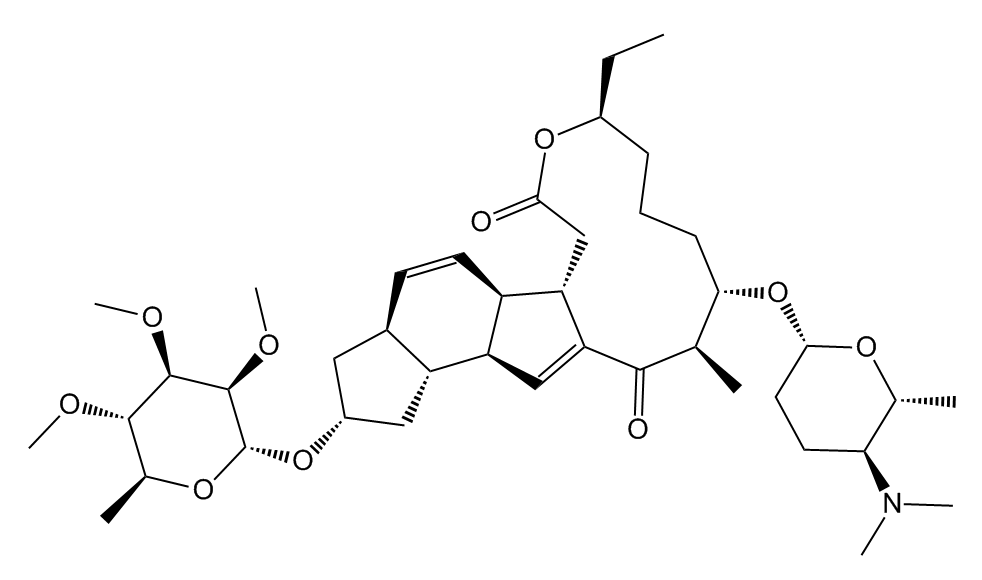
One of these complex examples is called spinosad and it is produced by a microbe called an actinomycete. We have found this to be a particularly effective insecticide for use on crops yet quite benign for the environment and not toxic to people. The chemical company that produces this for farmers relies on the natural microbe to produce this complicated bit of chemistry.
spinosad
Structure of Spinosyn image by Capaccio via creative commons.


Long-Lived Natural Chemicals


Most naturally occurring chemicals are part of a cycle in which chemicals combine, making a material, but then eventually break back down into basic constituents to begin the cycle again. Some naturally produced chemicals are relatively long-lived. This can be a good thing in the case of the chemicals that are found in the organic matter of a healthy, undisturbed soil. These are not just any plant or microbial product; they are specific compounds that slowly cascade through a series of breakdown products.

For instance, plants make a group of complex, phenolic chemicals, called lignin, which are important for strengthening their cell walls. Lignin is quite resistant to microbial breakdown, although some fungi can and do destroy it, even as they decompose wood. Lignin is a major component of what is termed humus – the component of soil that helps to buffer nutrients and retain moisture. When soils are converted from wild land to cultivation, there is a dramatic increase in the rate of breakdown of these chemicals and thus the release of the carbon dioxide.

Some long-lived, natural chemicals, however, are less desirable. Under low oxygen conditions, soil-dwelling microbes can interconvert forms of nitrogen (e.g. ammonia to nitrate or nitrate to nitrogen gas). In that process, they “accidentally” make some nitrous oxide (N2O). Nitrous oxide is around 300 times more potent than carbon dioxide as a greenhouse gas because it lasts longer in the atmosphere. Unfortunately, human activity can exacerbate the production of this naturally generated chemical from farmed soils. Adjustments in farming practices can lead to a better balance of the production of natural chemicals that help or hurt greenhouse gas levels.


Fancy Polymeric Natural Chemicals


In the 1967 movie The Graduate, the character played by Dustin Hoffman is lectured about how the future is going to be all about plastics. Indeed, many people were excited in that era about polymers that chemists were developing, like nylon and polyester. These are based on long chains of monomers attached end to end.

Many of the most abundant natural chemicals on earth are also polymers, which are long chains made of simple sugar molecules. Depending on which sugar and how the sugars are linked together, the polymers result in anything from the cellulose that makes cotton fiber to wood or even the alginate from seaweed we use for thickening foods or the starch that is the primary energy source in foods like pasta, bread, rice or potatoes. Increasingly, we are tapping in to the enzymatic tools found in microbes in order to make polymers from renewable resources.

Variously Toxic Chemistries


Most people associate the term natural with the terms safe and wholesome. This impression has been created by decades of marketing, not by any understanding of the chemicals in nature. Many natural chemicals are perfectly benign; however, nature’s assortment of chemicals also includes many that are toxic by various mechanisms.  Lots of plants make chemicals to protect themselves from being eaten or otherwise bothered. We have all heard about nasty plants like poison ivy or even lovely plants like the Colorado Columbine which are dangerous to eat.
nature-toxic
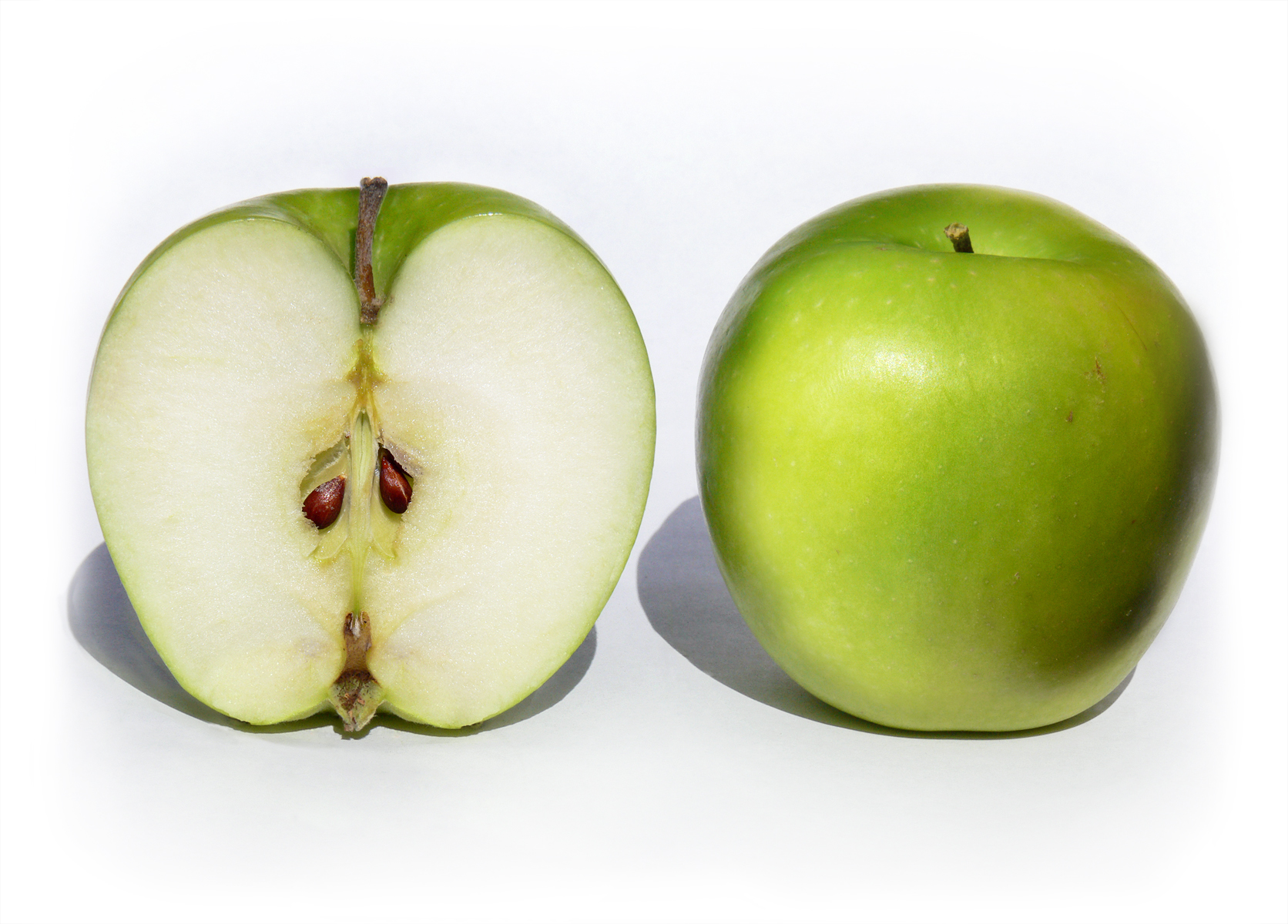
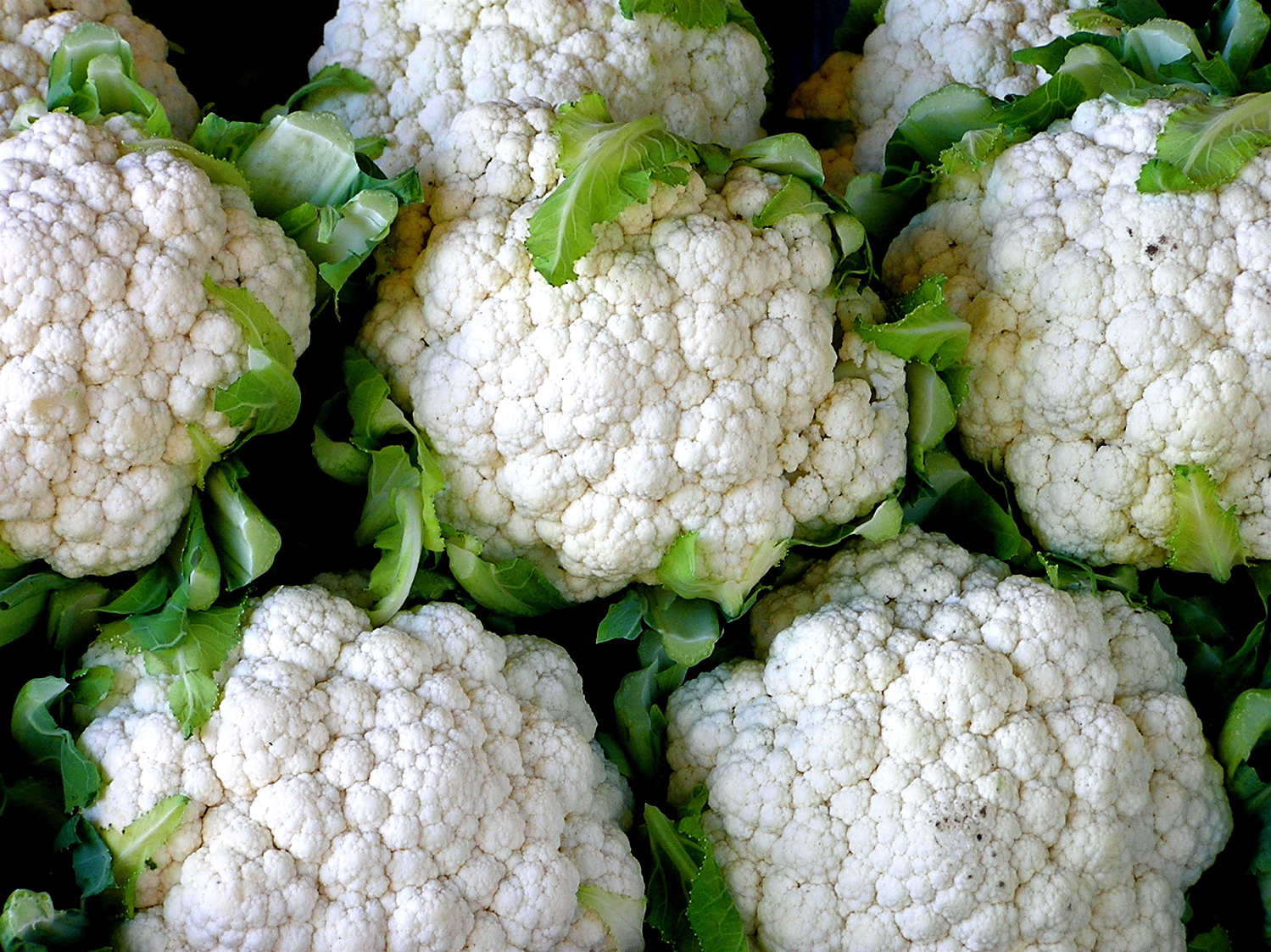
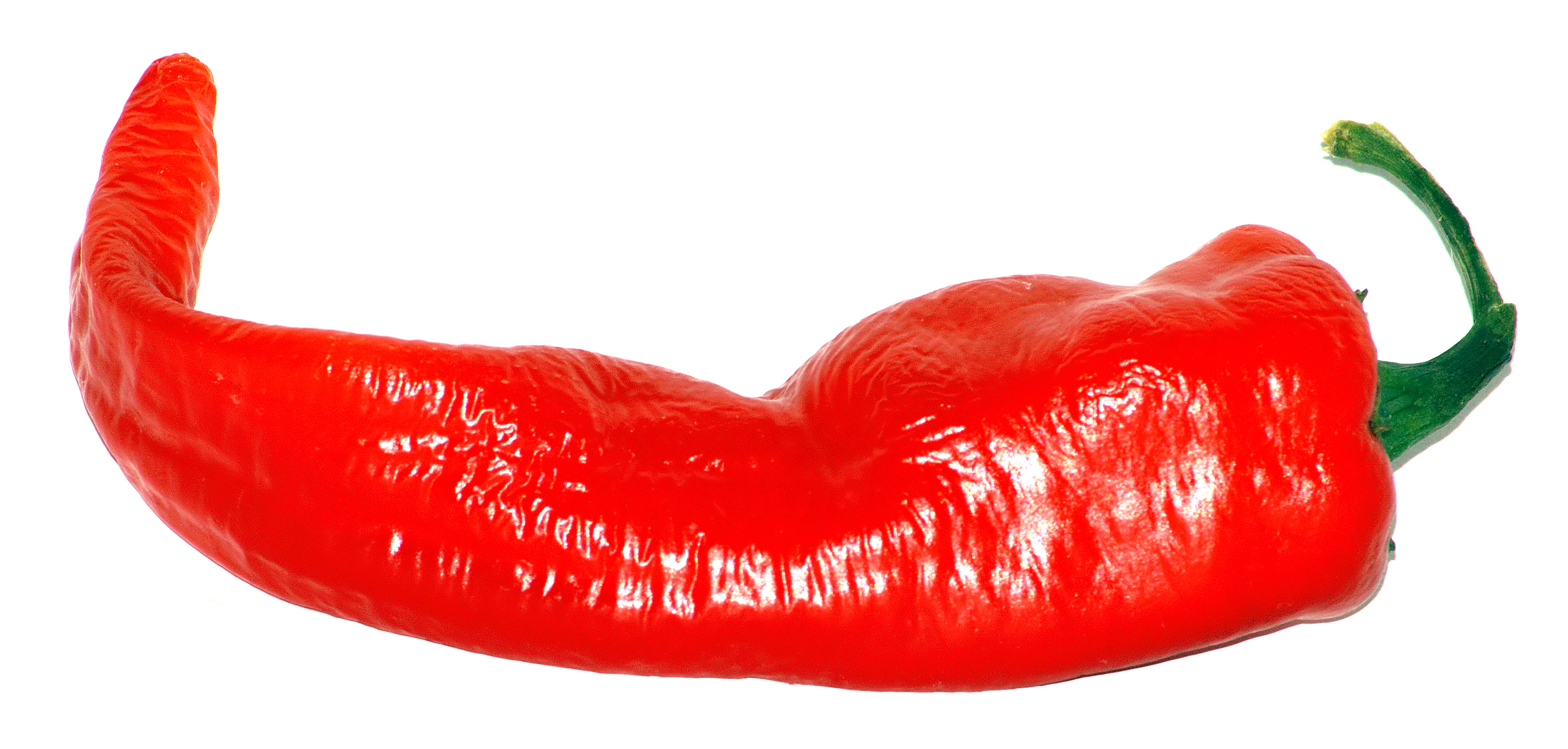
Cut Granny Smith apple image from Wikimedia. Cauliflower image from Calliope via creative commons. Hot pepper image by Andre Karwath via creative commons. Capsaicin structure by Jurgen Martens. Nicotine structure by NEUROtikerCyanide structure via Wikimedia.
Food plants also make some fairly toxic chemicals. The seeds of many familiar crops, including apples, cherries and peaches to name a few, contain a chemical storage component called a cyanogenic glycoside. When the seed is damaged, enzymes release hydrogen cyanide from the glycoside. Hydrogen cyanide is very toxic! It is a good reason not to eat those seeds, although it would take a lot of such seeds to hurt a person. The capsaicin that we enjoy in hot sauce is an insect protection chemical made by the pepper plant to defend itself. It is moderately toxic to us but not at the doses we normally consume. Quite a few plants make nicotine to ward off insects including tomatoes, cauliflower and eggplant. Nicotine is very toxic but not at the doses these crops produce. As with any toxic chemical, natural toxins are only an issue to humans at a certain dose.

Some natural chemicals, however, are extremely dangerous and we don’t want those in our food. Mycotoxins are a particularly nasty category of natural chemicals produced by certain fungi. One such chemical, called aflatoxin, is among the more toxic chemicals in existence and is also a potent carcinogen. Unfortunately, under certain circumstances, fungi can produce aflatoxin in food crops. In the developed world, a system of controls and testing keeps us well protected from this; in the developing world, though, aflatoxin is a major cause of death both through acute and chronic effects because it contaminates staple foods like corn or groundnuts.

nature-aflatoxin
Aspergillus infected groundnut image from International Institute of Tropical AgricultureAflatoxin structure by Ju

Some natural chemicals are elegantly selective in their toxicity. A soil bacterium, called Bacillus thuringiensis (usually called “Bt”), makes proteins that are specific in their toxicity to only certain categories of insects. One strain of Bt makes proteins that only effect beetles while another’s toxin only affects caterpillars. None of these Bt proteins are toxic to humans or almost anything else. We have made excellent use of these natural chemical toxins as sprayable insect controls and by genetically engineering plants to make their own supplies of the protein resulting in the plant being insect resistant.

Conclusion


Yes, nature does a great deal of chemistry. For us, these chemicals can be a source of good things, a source of good ideas, and sometimes a hazard or problem.

you are welcome to comment here and/or to email me at savage.sd@gmail.com
reade more... Résuméabuiyad

The Many Ways Farmers Control Pests

The post originally appeared on the Putting Pesticides in Perspective (PPIP) Blog on 2/7/17 on which there are also 6 related sub-posts

Whether a farmer is growing in an organic or conventional system, his or her crop needs to be protected from damage from plant pests (insects, fungi, bacteria, viruses, nematodes, weeds…). To fail to minimize pest damage leads to inefficient use of scarce resources like prime farm land, water, or inputs. The quality and safety of the final products can also be compromised.
While materials we think of as “pesticides” play an important role, modern agricultural pest management depends on a combination of several tools and strategies which, when used together, offer a more resilient, economic, and effective means of crop protection. Though some of these practices have been part of traditional farming, many are more recent innovations. The explicit design of these multi-strategy programs began in the 1970s, and the approach is now widely adopted as integrated pest management (IPM). The optimal IPM program varies widely by crop and geography; this post will describe some examples that highlight the various components.

The approaches used to implement IPM programs generally fall into six categories:
  1. Avoiding the pest
  2. Employing the plant’s own genetic defenses
  3. Modifying the climate
  4. Disrupting the pest's life cycle
  5. Fostering beneficial organisms
  6. Using targeted pesticide applications
A brief introduction to each of the six approaches follows with additional links to the more detailed presentations. Each post will link back to the list above.
  1. Avoiding the pest
Not all pests occur in all places either because they have not spread there or because they cannot flourish in the climate of a given region. Both of these limitations have been historically important factors to consider when deciding what crops to grow where, and these pest limitations continue to be important considerations for farmers. Long-term, this strategy is limited by climate change and by the extensive movement of people and goods around the world
Plants fight back against pests by evolving a variety of defensive strategies controlled by genetic traits. Built-in genetic resistance is an attractive form of pest control for farmers, but it is a resource that requires considerable effort to employ and stewardship to maintain as an effective part of an IPM program. For some crops, farmers can maintain a seed bank of genetic variation and draw upon it to keep ahead of the pest’s inevitable tendency to evolve around plant defenses.
When genetic resistance is available, it is generally wise to complement it with other IPM elements, such as pesticides, to avoid losing the valuable traits. For many crops, conventional methods of breeding are too slow and/or complex to easily employ genetic solutions. Traditional and advanced grafting approaches offer a dual plant genetics approach that has been quite useful in many systems. Advancements in biotechnology allow farmers to use same-species resistance genes in hard-to-breed crops as well as novel genetic approaches that have shown considerable benefit in the few cases where they have been allowed to-date.
In some cases, farmers can shift the microclimate in which the plant is grown enough to reduce the threat of certain pests. Various degrees of protected culture have been widely used to shield crops from rain and/or to shift the temperature regime to extend the growing season at either end. The nature of the plant canopy can sometimes be managed to reduce humidity, increase light or otherwise create a microenvironment that is suppressive to certain pests.
Several strategies for pest control center on making it more difficult for the pests to reproduce. These range from crop rotation to insect pheromones to removal of damaged or infested plant parts. Other approaches involve the release of male insects which are sterile so that the females with which they mate do not produce any offspring.
Even pests have pests, and often there are ways that farmers can encourage these natural enemies to help keep pest populations low enough to obviate the need for other control measures. Sometimes, it is possible to actively produce and add the bio-control organisms to the system.
Farmers can use a wide range of crop protection agents as part of an IPM system. In a great many cases, these agents are low hazard options in terms of environmental, beneficial, or human impact, but the use of all such agents is highly regulated on a national and state level. These crop protection agents are often important for preserving the utility of other IPM approaches, particularly genetic resistance. Farmers have many economic and practical incentives to only use these materials on an as-needed basis.
Pest control in agriculture is a multi-dimensional effort, and pesticides are just one of the important tools that farmers employ. Some of these tools have been in use for a long time and some are new. With climate change, the control of pests will become even more difficult. As the global population grows and standards of living increase, it will be even more important for farmers to avoid the sort of losses and food waste that pest cause. Fortunately, the toolbox available to fight pests is diverse and constantly improving.

You are welcome to comment here and/or to email me at savage.sd@gmail.com

reade more... Résuméabuiyad

A Day Of Accidental Ag Tourism


(This post originally appeared on Better Food Stories 10/3/16)

A few weeks ago I flew to Pasco, Washington and then drove up to Yakima. Eastern Washington is a very dry region, but it has several major rivers and the Columbia Basin Reclamation Project that allow for a flourishing and diverse agricultural industry. My progress was slowed by an irresistible urge to continually exit the main highway to take pictures of these carefully tended crops and to see some of the on-going innovation in planting systems.

A classical, widely spaced orchard

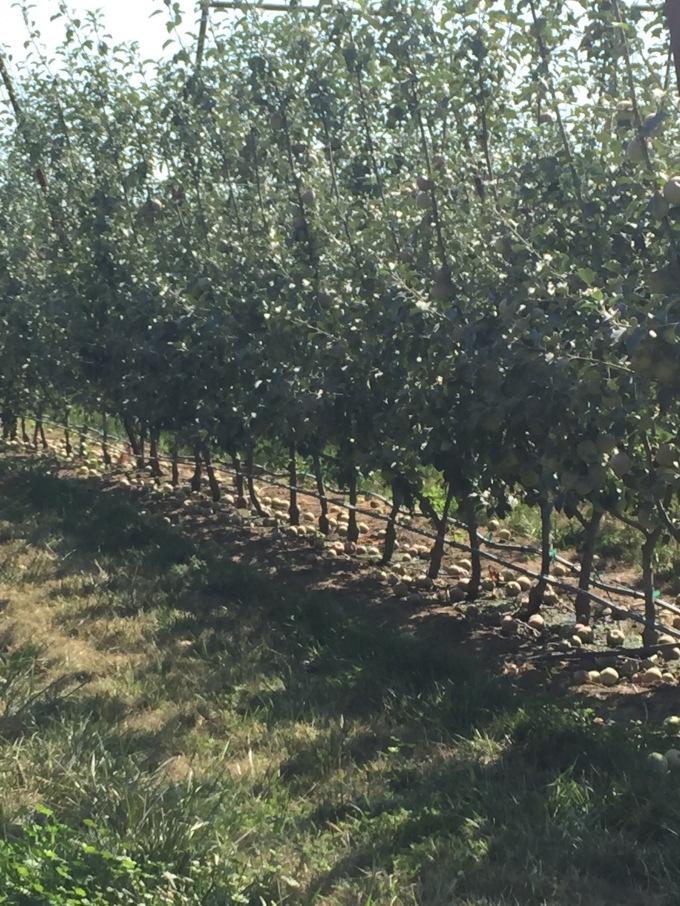
Tree fruits like apples, pears and cherries have long been important to this region. It was fascinating so see some of the innovation used to grow these crops. The image above is from a more classic orchard where large trees are grown with fairly wide spacing between trees and with large swaths between the rows. The next image shows a newer style orchard, in which trees are planted at high density along the row (every 18” or so), and supported by a trellis.
5-new-high-density-trellised-planting
A newer, high-density, trellised orchard
This system gets the trees into full bearing within 2-3 years and can be harvested without the use of ladders (a worker safety and efficiency advantage). The space between the rows is also narrower requiring smaller equipment in terms of tractors, sprayers etc. Note that weeds are controlled in the row with herbicides for water efficiency, and the “middles” support a diverse “cover crop” which stabilizes and feeds the soil.
4-one-style-of-trellising
An alternative "V"shaped trellis system for apples
In the photo above we see a different trellising strategy. In this case, the high density trees are trained in a “V” shape with the goal of even more efficiently capturing the sunlight. Driving further down the road I saw something unusual in the distance and decided to investigate.
7-shielded-orchard-in-distance
An interesting, covered orchard in the distance
It turned out to be another high-density, trellised apple orchard, but in this case it was being grown under a shade cloth to filter the light. This would reduce the chance of fruit getting a “sunburn”, and as you can see, this orchard had an abundant crop of picture-perfect fruit nearing maturity.

High density trellis under shade cloth


Hops

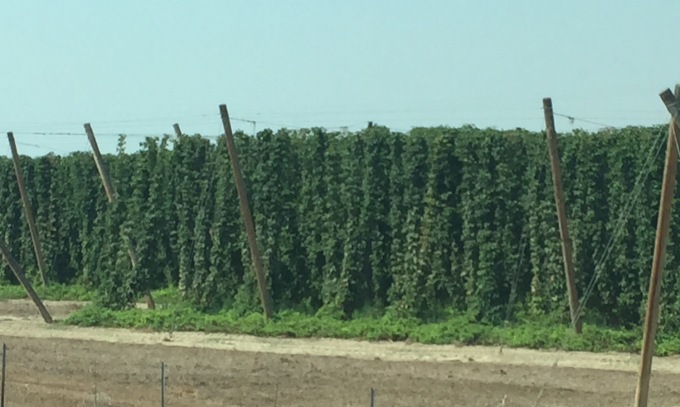
Hops, a highly aromatic plant, have been grown in this region since the 1870s, but even more so of late to meet demand for the booming craft beer industry. Hops are a vine which is trained on very tall (20’ or more) trellises. It is quite impressive to see! From the side of the field (below) it is a giant green wall.
hops-side-view
One of the many "hop yards" in Washington serving the craft beer boom
1-hops-on-trellis
Hops grown on trellises with telephone pole sized supports

Grapes

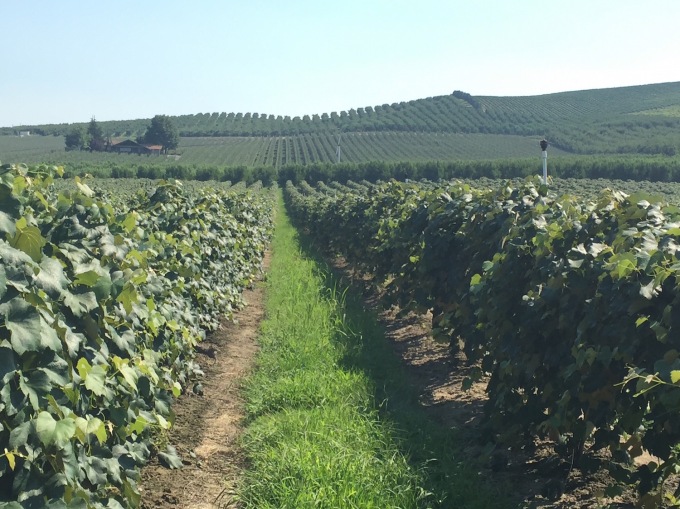
Washington state is home to a flourishing grape industry with many excellent offerings for wine aficionados. It has also been a long-term source of juice grapes, which is what you see in the vineyard below. Note again the clean vine-row and the cover crop in the “middles.” This is the best way to use water efficiently, build soil quality, and prevent erosion on these hilly locations.
11-cover-crop-and-clean-vine-row
Vineyards
Eastern Washington is also home to many other crops. I’ll just throw in two more examples of a sweet corn field and an alfalfa field.
Sweet Corn 


Alfalfa
The next day I had the privilege to spend time with a number of representatives of the grower organizations and others that support these Washington farmers. The meeting was organized by the Washington Friends of Farms and Forests, which is a grass roots alliance of those who grow the crops or tend the timberlands. I’ll be working with many of these folks for the next few months documenting some of their challenges and strategies tending these diverse plant species for the benefit of the broader society. As always, it was great to see real farming in action!

reade more... Résuméabuiyad

How Satellite Technology Can Help California's Water Woes


(This post originally appeared on Forbes on 1/7/16)
It's raining hard here in Southern California for the second day in a row. After four years of drought it's a welcome change, but it's also causing problems. Again today my cell phone sounded an alarm for flash flooding, and the areas affected by previous fires are in real danger of mudslides. We are predicted to get a substantial amount of precipitation from one of the strongest El Nino events in a very long time. Still, the experts tell us that this one season will be unlikely to overcome our water woes.
For a very long time, California has been able to provide water for her cities and farms even though generally there is no rain for a long period between late spring and fall. The Mediterranean climate is not only enjoyable, it makes the growing of crops easier because they only get the water we want them to have during the growing season. Unfortunately, our municipal and agricultural systems have depended heavily on being able to store a great deal of water in the form of snow in the high Sierra mountains. When that snow-pack does not develop, we don't have the reservoir capacity to store enough to cover our needs through the dry season.

Over the past several years there have been cut-backs on water deliveries to irrigation districts in order to have some supply left for cities and for environmental needs in terms of at least some minimal stream flows.  The farmers have cut back on planting of annual crops so that much land is left fallow.  However, a great many California crops are perennial trees and vines that have to be watered to keep them alive.  Increasingly, farmers have been tapping into ground water using existing or new wells.  This can only be a temporary solution because the aquifers are being drawn down making pumping costs higher and risking salt water intrusions.
In the past, ground water has not been regulated to any great degree here in California. As the recent drought intensified, it has become obvious that some system needs to be implemented to make sure that our groundwater can be managed in a way that is equitable and sustainable. But that requires knowing a lot more about what is happening down below, and as the saying goes,  "you can't manage what you can't measure."  We are lacking the historical data to guide such a system. Fortunately, there is a program being piloted in our state by a diverse set of public and private forces which uses state-of-the-art technology to track groundwater in a way that was never before possible.
A couple of months ago I had a chance to interview Carl Ganter from the foundation-funded non-profit, Circle of Blue which has been active in the water arena for some time. They have teamed up with the folks at NASA’s GRACE program (Gravity Recovery and Climate Experiment) which monitors small gravitational variations in the Earth from space. These are indicators of things like changes in ground water and allow us to "see" what is going on. Scientists at the University of California, Irvine are also part of that effort. Twitter is getting actively involved in providing “ground truth” such as data about pumping depths that are being experienced. The Columbia University Water Center and the Pacific Institute are also involved more from a policy perspective. Qlik, a company with data dashboard and business intelligence experience, is combining all this input and working out a way to make it comprehensible for all the stakeholders like government regulators, farmers and municipal water districts. This is another great example of a public/private, for-profit/non-profit partnership seeking to accomplish something none of the entities could do alone.
The hope is to have this “dashboard” of information specific to California live within a year or so. Then, the plan is to move on to other key regions like the Ogallala Aquifer and to the Southeastern US. Then the experience will be used to better visualize other critical aquifer issues throughout the rest of the world.
Being able to visualize our ground water won’t in and of itself solve our California water situation.  The experts warn that it will take more than one wet winter to recharge our aquifers.  We need to be doing some serious work on how to balance our water needs for the cities, the farms, and for environmental needs. These are contentious topics, but hopefully better data on the ground water aspect can help to inform a constructive approach.
You are welcome to comment here and/or to email me at savage.sd@gmail.com
reade more... Résuméabuiyad