Pages

.

Humankind vs Weeds - The Epic Battle

The Center For Food Safety recently touched off a controversy by using a misleading and manipulative term - “Agent Orange Corn” to describe a biotech (GMO) trait working its way through the regulatory process.  The technology will make corn, and later other crops, tolerant to a herbicide named 2,4-D.  In the early 1960s that was one ingredient in a defoliant mix used by the US military in Vietnam; however, a one minute Wikipedia search shows that the terrible health issues with Agent Orange were caused by an unrecognized dioxin contaminant in the other herbicide in the mix.  Since that time, 2,4-D has passed decades of increasingly strict safety reviews.  It still used in 70 countries and is a common ingredient in the products homeowners use to control weeds in their lawns.  Such facts have not prevented elements of the blogosphere, Organic and environmental community from spreading the disinformation.  The credulous reception of this message suggests that there is a need to explain the importance of chemical weed control to the non-farming public.

Weeds are serious business.  Ever since humans began to farm more than 10,000 years ago, they have battled weeds.  It has been a struggle of literally, “Biblical proportions.” In Moses’ narrative of “The Fall” in the Hebrew scriptures (written ~4000 BCE), Adam and Eve are not only removed from the Garden of Eden, they were each given a specific curse which would continue to effect their respective sexes:  Eve got “pain in childbirth.” Adam got weeds.  “Accursed be the soil because of you!  …It will yield you brambles and thistles… By the sweat of your face will you earn your food ...”  (Genesis 3:16-19).  In developed nations like the US, this “curse” falls mainly on the >1% of the labor force that still farms.  The rest of us need to understand their situation.

For millennia there were two ways to grapple with weeds - pull or hoe them with intense human labor, or tolerate their yield-limiting effects.  Then, in the early 18th century the ancient battle with weeds began to change.  An English agronomist named Jethro Tull (not the epic rock band), began promoting “horse-hoe husbandry.” Farmers could use simple, animal-drawn machinery to plant crops in neat rows and then physically destroy the weeds in between (tillage).  Crop yields increased as did the amount of land that one individual could farm.  Tractors accelerated these trends.  However, there was an environmental downside.

Mechanical tillage greatly increased soil erosion and the water pollution associated with it.  In some areas tillage contributed to the “Dust Bowl.”  As soil is tilled and re-tilled, it declines in its ability to store nutrients and to capture and hold rain water. Beyond these issues, tillage did not fully remove ”Adam’s curse.”   Weeds like Canada thistle and Native Bindweed are quite efficiently spread over fields by tillage equipment.  

Though soil degradation continued, the need for tillage was essentially unquestioned until 1943 when Edward Faulkner wrote his radical book, “The Plowman’s Folly,”  questioning the need for tillage in agriculture.  That idea, and the advent of chemical herbicides, led scientists and farmers to explore ways to farm without major soil disruption.  In 1960 farmers began the first commercial-scale attempts to farm without plows or harrows.  The “No-Till” movement began.

The original drivers for attempting “No-till” were soil erosion and fuel costs. It soon became clear that “no-till farming” had many more advantages: reduced water pollution, rainwater conservation, and restoration of soil quality. As no-till advanced, some farmers were not only dealing with the curse of weeds, but also doing so in a way that was far better for the environment than in the old days of “the plow.”  The introduction of herbicide tolerant biotech crops (GMO) in the late 1990s increased the adoption of no-till farming methods.  There is much more room for adoption of no-till and related, sustainable farming advances, but this is clearly the direction we need to go.

Unfortunately, the curse of weeds remained.  It was widely expected that weeds would eventually be selected which were resistant to the herbicides used on biotech crops.  This had happened with many classes of chemicals before biotech.  The slight surprise was how long it took.  Several important weeds have now become resistant to “Roundup®” starting yet another chapter in the ancient battle with weeds.  What farmers can do is to follow “resistance management practices” by switching herbicide “modes of action” and other methods to stay a step ahead of their old enemy.  The 2,4-D resistance trait in the recent controversy is being developed specifically for that purpose.  That, and other new herbicide resistant crops that are in the pipeline, would be welcomed by farmers still battling “Adam’s curse” of weeds, and they will hopefully help even more farmers maintain, or make the challenging transition to no-till farming. 

There is more at stake than progress with no-till.  Since 2007, we have entered a period of volatile global food prices and supply problems that are unprecedented in modern history.  We are trying to feed more people, feed many of them better than in the past, and to do so in a time of climate change that will only make farming riskier.  This is no time for non-farmers to begrudge the farmers any tools which pass muster in our regulatory framework.  The weeds have shown that they will always be there, as will be the need to deploy new technologies in a prudent manner. 


reade more... Résuméabuiyad

The Marketing Of Non-Existence


As American consumers, we frequently purchase food and beverage products based on what is not in them.  Whether it is the level of an ingredient (low fat, low carb…) or the complete absence of an ingredient (fat free, no cholesterol, no HFCS…), products are now defined by what they do not contain, rather than what they do contain.  This is such a common element of our experience that it does not even strike us as odd.  If you step back and think about food from a historical or global perspective this is absurd; having enough food to survive has been a common issue for human survival.  Instead, we have become numb to “The Marketing of Non-Existence.” 

What does this say about our society?

I believe this phenomenon says five, inter-related things about us.
  • 1.     We are wealthy
  • 2.     We are not well versed in basic nutritional principles
  • 3.     We have a tendency towards “magical thinking” when it comes to health
  • 4.     We are thus susceptible to manipulative marketing strategies, and
  • 5.     We are largely unprotected from the “fear industry” associated with food


We are Wealthy

Although few of us think of ourselves this way, most Americans are quite wealthy, spending 10% or less of our income on food, which includes costs for convenience in addition to actual nutrients.   Our choices are about the details of what and how we will get our food and almost never about whether we can eat well or even eat at all.  Indeed, as our obesity epidemic demonstrates, our food issue is one of over-availability.  We are accustomed to buying foods based on non-existence features, possibly because the existence of plentiful food is never a question.

We Are Not Well-Versed in Basic Nutritional Principles

In 1990 Congress passed the “Nutrition Labeling and Education Act” (NLEA).  That law established the requirement for the official nutritional content labeling, which has been on the “back of the package” for foods for the intervening twenty-two years.  The law also called for developing and implementing a comprehensive program to educate the public on basics of nutrition and on how to properly interpret the new labels.  Unfortunately, Congress never authorized the funds for the education part, and so we have nutrition labels that few people know how to interpret.  The difference between the official FDA labeling and the largely unregulated marketing labels is obscured.

We Have A Tendency Towards Magical Thinking When It Comes To Health

Lacking basic background, and being confronted with less-than-balanced sources of “information,” we tend to grasp at simplistic ideas about how to stay healthy.  If we avoid cholesterol maybe we won’t have a heart attack.  If we just avoid fat, we can become thin.  The reality of our need for a moderate and diverse diet with reasonable exercise is lost amid the marketing messages.

We Are Susceptible To Manipulative Marketing Messages

During a period where “saturated fat” topped the non-existence agenda there was a major marketing campaign using the “front of the package” label that said, “No Tropical Oils.”  Palm and coconut oils are indeed saturated fats, but the drive to get consumers to avoid them was less about health and more about being able to sell more soybean oil.  Soybeans are mainly grown for their protein content to be used in animal feeds, but they also contain 20% oil.  The soybean processing industry wanted to expand their sales into food categories by pushing out tropical and animal based fats.  The problem is that soybean oil has properties that make it unsuitable for making a butter substitute (margarine), for many baked goods, or for use as frying oil in the quick-serve restaurant industry.  To fit those uses, soybean oil had to be “partially hydrogenated,” a process by which its excessive “unsaturation” was reduced.  This process generated “trans-fats” which are forms of fat that do not occur naturally in plants and are rare in animals. These are not healthy oils at all.  So, this example of non-existence, faux health marketing ended up shifting the American diet towards something far worse for their health - something actually worth avoiding.

We Are Largely Unprotected From A Fear Industry Associated With Food

Having been exposed to such a string of messages saying “this is what makes food dangerous,” one might think that consumers would become skeptical about yet another scare.  Instead, it seems that we are a society that has become ever more credulous about each new, sensationalized, food-bogeyman.  RBST, HFCS, arsenic, pesticides, gluten, GMOs… all become subject to over-simplified, distorted, messages that help someone sell something, raise funds, or attract an audience.  

So, this is our sad situation.  We are a nation that has a food supply that is perhaps the safest, most diverse, abundant, and affordable in history.  Yet, rather than enjoying that privilege, too many of us either worry excessively about food choices, feel guilty, or make poor choices. 

You are welcome to comment here and/or to email me at savage.sd@gmail.com

Follow me on Twitter


reade more... Résuméabuiyad

GMO Labeling And The China Scenario


(This post originally appeared on Biofortified on 4/4/12)
When asked, "Do you want foods that contain GMOs to be labeled?" most US consumers say, "Yes."  To those unfamiliar with the food system, this sounds like a simple request.  The reality is that GMO labeling would be very complicated because it involves "negative identity preservation in low value, commodity channels." (I'll unpack that terminology below).  The best precedent for what that would mean is what has happened with certified Organic, grains and grain-based ingredients.  Over time, the Organic industry has shifted towards more and more off-shore sourcing of such foods - particularly from places like China.  Many of the same groups promoting GMO labeling have been also been concerned about the integrity of imported "Organic" foods.  The irony is that if the GMO labeling campaign is successful, it is very likely that the "Non-GMO" segment will follow the same"China Scenario*," and its associated risks.

Specialty Crops vs Commodity Crops

There is a broad spectrum of food and beverage crops ranging from very high-value, specialty items to low-value, bulk commodities.   Elite wine grapes are a high value crop that is "identity preserved."  Because climate and soil are so important for wine quality, the exact region, variety and even vineyard are carefully associated with the grapes after harvest, and great care is taken not to mix them with grapes of lesser or different value.  Field corn ("#2 dent corn”) is at the opposite end of the spectrum.  For most uses, corn is corn and it generally does not matter where it came from.  It is handled in huge quantities (like 110 car trains, giant barges…) and is "co-mingled" with corn from many sources.  If it moves into milling steps, the resulting "ingredients" also flow into more, low-margin, high-volume, and commingled streams.
Wine grapes are used in an extremely "high margin" business since the grapes are worth a great deal (~$1-3 per pound) and the resulting wine is worth far more.  Corn, even at current high prices, is only worth 10-12 cents per pound to the grower and only slightly more at each subsequent step in the food chain.  Keeping track of separate lots of grapes, handling them in small specific containers, and tracking the information costs money, but for the grapes it is more than worth it.  To keep track of individual lots of corn in the vast river that is the commodity corn market would also cost money - vastly too much money to be practical.  Corn is a "high volume, low value commodity," as are most of the other crops that are "GMO." (soybeans, cotton, canola).  For purely economic reasons, GMO crops will almost always be confined to high volume commodity crops because those are the only markets that involved enough acres to justify the investment in the generation and regulatory approval of a GMO crop.

The Organic Precedent

The rules for production of Organic crops include a requirement for "chain of custody," another term for "identity preservation."  That is one of several reasons why Organic is more costly.  In this case, the tracking is based solely on a paper trail and there is not any regular or even random testing.  That is unlikely to be a reason for suspicion in the US and Canada, but whether such a self-policing system is suitable for some other foreign countries is doubted by many (PRIGrist,USDASeattle TimesTreehuggerOrganic Consumers Union).  The cost of identity preservation has not been too limiting for high value Organic fruit and vegetable crops as they have increased to a few percent of the total.  For low value, commodity crops, Organic has made extremely limited inroads (Corn 0.25%, Soybeans 0.13%, Winter Wheat 0.51%, Spring Wheat 0.69%.  Also because these are crops that can be shipped long distances, the domestic Organic production has had difficulty competing with foreign (and sometimes suspect) sources.  That is the first example of the "China Scenario."

Would Labeling Create A Significant “Non-GMO Market?”

If mandatory GMO labeling were to be instituted, the only practical option would be to label any product that contains any ingredient from the major GMO crops as "may contain ingredients from crops modified by genetic engineering."  That would include the vast majority of "processed foods," but not almost any fruits or vegetables.  Even though these GMO containing foods have been on the market for 16 years without incident, and even though there has been abundant information about this in the press and on the web, a sudden wave of labeling might alarm some segment of the population and induce them to look for non-GMO alternatives.  That is almost surely the hope of some of the commercial interests that are promoting labeling.  Consumer alarm might establish a new, "Non-GMO" sub-market which goes beyond the current Organic market (The Organic community decided rejected genetically engineered crops long before they were ever commercialized).

Who Would End Up Fulfilling That Demand?

A new group of non-GMO customers might be willing to pay somewhat of a price premium, but probably less than that which is tolerated for Organic.  Foreign sources of grains and related ingredients would be very likely to enter the market, and that would make trying to supply non-GMO crops even less attractive to domestic grain growers.  Exactly how unattractive will depend on what is described by another, obscure, food industry term: “adventitious presence.”  There are some medium value commodities that are “identity preserved” in the normal system.  High protein, Hard Red Spring Wheat is segregated and identity preserved because it has a “positive attribute” that is valued by the baking industry (high dough strength).  If there is a little bit of other wheat mixed in because of carryover in bins or harvesting equipment (this is how adventitious presence happens), it is no problem because the 95-99% of desired wheat will still provide the desired properties.  In the case of a non-GMO grain, it is being bought for what itisn’t, and a decision will have to be made about what level of “adventitious presence” to tolerate.  The lower that threshold, the harder it will be for any American or Canadian farmer to sell into the non-GMO market.  A consumer market based on fear is likely to favor a “zero tolerance” which would make it extremely difficult to source these grains domestically.

Unintended Consequences

The more this market might grow based on off-shore sources, the more likely it would be that there will eventually be a major food scandal.  It might involve adulteration (e.g. as in themelamine milk disaster), unregistered pesticide residues, heavy metals, or most likely of all -mycotoxin contamination.

Mycotoxins – Not Just An Abstract Concern

Just because low value commodity markets don't track "identity" does not mean that they are unprotected from real threats.  Corn, for instance, can be contaminated in the field or in storage with certain fungi, which can make seriously nasty toxins.  The levels of these are closely regulated in the domestic food and feed industry with limits set by the FDA and enforced by the USDA.  Our industry does a great job overall of making sure that contaminated grain does not makes its way into the system in the first place.  Such testing and exclusion mechanisms arepractically non-existent in places like China.  In recent years the Chinese government has begun to do some mycotoxin testing and they find serious contamination with things like Aflatoxin on a frighteningly regular basis.  Thus, if the GMO labeling campaigners generate the non-GMO market they desire, they will be setting-up consumers for a very real health risk.   This exposure already exists in the imported segment of the Organic market, but even a moderately large non-GMO segment would magnify that risk.

It would be interesting to poll the average American after they were told about the risks associated with "the China scenario," and to see how that influences their support for a labeling law.


You are welcome to comment here and/or to email me at savage.sd@gmail.com.

*BTW: I'm not a "China Basher." I think that China does many things extremely well, but when it comes to certain food safety issues, the story gets to be complex.

non-GMO label image from decorat
reade more... Résuméabuiyad

Technology Will Not "Feed The World." Farmers Might


I've spent more than 30 years working in the agricultural technology sector.  I've written scores of blog posts defending it over the last three years.  That said, I don’t believe that "technologies" as such are going to feed the world.  Only farmers can possibly feed us as we face the epic challenge of doing so over the next few decades.  If farmers have great technology options, that can help both their productivity and environmental footprint; however, the burden falls on the farmers to integrate those technology options into a set of extremely complex and high-risk set management decisions.  Technology is just one component of their responsibility.

One often reads or hears assertions that "X" can or can’t "feed the world" (Organic, Conventional, GMO, Local...)   I think that all these statements miss an important point.  Anyone who farms on a commercial scale has to make scores of critical decisions each growing season.  There is no one suite of technologies or farming philosophies/rules that determine whether that farmer will be successful from either a food production point of view or an economic viability point of view.  A successful farmer will have integrated many interlinked choices about technology, practices, and timing.  These will have been based on monitoring of economic, climatic, and pest status.  They will involve numerous "bets" about the unpredictable course of those and other factors.  Farming is no business for the faint of heart.

Put Yourself In A Farmer’s Shoes

Think about the risks that an annual crop farmer takes.  They spend a good deal of money on their crops many months before it will be harvested and in many cases even longer before it will be sold.  They choose the seed variety to plant (many options in terms of traits, GMO and otherwise, suitability for their farm in terms of a host of adaptability).  They choose how to fertilize that crop, how to irrigate it if they have that option, how to manage its pest issues from before planting to in-season.  They have already had to decide whether to plant a winter cover crop.  They have had to decide about what sort of tillage system to use in and between crops (no-till, strip-till, conventional...).  They have to choose and maintain increasingly sophisticated equipment and they have the option to employ a whole range of “precision farming tools” and detailed databases about their farm.

All of this has to be done with only a limited ability to predict weather patterns and extreme events that can have a huge effect on the crop.  Farming is a high risk venture.  We all depend on farmers being willing to take those risks.

The Consumer Side

In America, and the West as a whole, we have been taught that “the customer is always right,” and that we are supposed to have any choice that we desire.  When it comes to food production, we can choose what we buy, but we don’t have a legitimate right to tell farmer what they can and can’t do based on our own urban sensitivities.  Farming is already a heavily-, and mostly well-regulated business.  If the USDA, EPA and FDA approve of a technology option, and if farmers find that it makes their job easier, less risky, or more profitable - who are we to begrudge them that opportunity?

Consider, for instance, the disparity between farmers and the broader population on the question of GMO crops.  Most farmers have been enthusiastic adopters of biotech crops where ever they are available in both the developed and developing world.  Many consumers remain wary of, and poorly informed about, the technology even after 16 years and billions of acres of cultivation without actual issues.

If people choose to reject science and regulators, it is certainly their option, but only for their own consumption.   A commenter on one of my posts recently said that he "should have a voice in how we produce our food."  Considering that the "we" was gratuitous, I said that while he should have a choice in what he buys, that cannot extend to the right to deny a farmer choices that fall within well-regulated norms.  We don't want to imitate the Europeans who have let politics trump their own scientific assessments.  There was a good recent post from a frustrated Portuguese farmer about this.

The vast majority of us depend on farmers, not just for survival, but also for the considerable pleasure and health benefits that are available at a remarkably affordable cost in modern society.  We would do well to appreciate the complex, risk-laden enterprise of the farming community, as well as their lack of leverage in the food system.  We should have more respect for their opinions.  
  
You are welcome to comment here and/or email me at savage.sd@gmail.com

no-till corn image from Indiana NRCS

reade more... Résuméabuiyad

How I Helped Create A Superweed


This last week I've been engaged in blogosphere discussions about "Roundup Resistant Weeds," and other so-called "Superweeds."  Many people want to assign blame for this development. The truth is that many factors were involved and the adaptability of weeds has been and always will be a big challenge.  I should know:  I actually once helped to select for a "superweed!"  I did so in the process of trying to find a "greener" alternative for weed control.

My Move Into Biocontrol

In 1989 I joined a small company called Mycogen, that was in the business of developing biocontrol agents - living organisms that control pests.  I had been working in synthetic fungicide discovery at DuPont and felt very good about the sort of safe, new products we were developing, but I wanted to give biocontrol a try (it also didn't hurt that I would be living in San Diego instead of Delaware).

I joned the "bioherbicide" group, and our most interesting project involved a bacterium in the genus Xanthomonas that had been discovered by a researcher in the Midwest  It infected a weed called Annual Bluegrass (Poa annua,  or ABG for short.  See the photo at the top of this post)  ABG is a big problem in turf because it makes lots of unsightly seed heads, creates lighter green patches, and has a tendency to die from disease in the summer leaving bare patches.  Golf course and park managers hate it.  However, because this grass is closely related to other desirable grasses, it has always been difficult to find ways to control it in turf.

OK, we knew that if we solved this problem we weren't saving the world, but this was a great place to start in biocontrol.   If we could make a product work for this high value market, that would fund the needed research to improve ways to grow and stabilize live products in general.  Also, even though bacteria usually only infect plants through wounds, that was not going to be a problem because this Xanthomonas biocontrol was applied during the process of mowing the turf.  Its effects were quite dramatic in greenhouse tests.  As one of my technicians once described this to a visitor: "this grass is not only merely dead, it's most sincerely dead."

Hurdles to Pass

Before we could field-test this "bioherbicide" option, we had to demonstrate to the USDA that this pathogen didn't just occur in the Midwest, and that it wouldn't kill any desirable plants.  I also got to go to Japan to help our partner company find isolates there as well.  That essentially meant touring lots of famous shrines and gardens while furtively reaching down and pulling up ABG plants and stuffing them in baggies to take back to the lab.  We had to learn to grow substantial volumes of the bacteria and how to keep them alive at least long enough to take to the field to test.  We had to test our bacteria in small plots of planted ABG to determine what rate was needed.  Once all that was done we were finally ready to try using this in the real world.

Early Success

At first our experiments on actual golf courses, etc. were pretty exciting.  A week or so after the bacteria were applied, the ABG plants began to wilt.  It happened slowly enough that the desired grass had time to fill-in, and the area nicely transitioned from a splotchy, weedy mess to a nice, uniform turf.  We had lots of work left to do on stabilization before this new "bioherbicide" could be commercialized, but we had already started generating quite a bit of interest in the turf management community and elsewhere  (VP candidate Dan Quayle came to visit Mycogen during this period - we were just that cool - lol).


Problems Arise

Soon, however, there was a problem.   We started finding that some of the ABG plants in our plots didn't wilt.  They looked just fine.  We collected seed and took it back to the lab.  It turned out that there was a "bio-type" of ABG which was not susceptible to this pathogen.  It was a "perennial biotype" of "annual" bluegrass (I know that sounds dumb for something named "annual", but instead of dying after going to seed like the annual type, this strain kept growing via rhizomes).  Our bioherbicide was simply selecting for those tolerant types.  We had selected for a "superweed" (in modern parlance).

This phenomenon turned out to be common for biocontrol agents.  Their beauty is that they can be super specific and thus safe to non-target plants and everything else.  Their downside is that populations of things like weeds almost always involve a wide mix of genotypes, and so our nice, "green," biocontrol agent selected for tolerance far faster than any synthetic herbicide.

Was This Really A Superweed?

Is it fair to call our Poa annua nemesis a "superweed?"  Actually that term is greatly over-used.  How "super" the weed is depends more on its original biology than on how it was selected (by a regular herbicide, by a herbicide used on a tolerant crop, by a biological agent...).  The most troublesome weeds are those that make a great deal of seed quickly, that emerge over a wide window, that have ways to spread seed, and which are highly competitive with the crop.  ABG has all those characteristics and that is part of why you can find it just about anywhere.  The resistant lines that we had "created" by spraying out bacterium were no worse than the original.  They were just resistant to our bioherbicide. The same is true with weeds that have become resistant to Roundup or to a host of other herbicides.  The reason some of the current resistant weeds are important is that they grow in important food crops.  The US has something like 50 million acres of managed turf, but that isn't feeding anyone except some rabbits.  So, the "superness"  of weeds isn't  a function of whether they are related to GMO crops, it comes down to their fundamental biology.  Also, to be accurate no one "creates" a super weed.  We just select for something that natural biological processes have generated.


So that's how I helped select for a superweed.  This technology was not commercialized because the weeds had already beat us.  It is poetic irony that annual bluegrass is a huge issue in my own lawn and garden. (See the lighter colored areas in my mixed clover and tall fescue lawn.)

Oh, by the way, I still keep up with the status of the biocontrol industry since I left it in 1996.  They are definitely making some good progress, but its still a very small part of how we control pests.  That's OK, we need all the tools we can find.

You are welcome to comment here and/or email me at savage.sd@gmail.com
reade more... Résuméabuiyad

A Sincere Reply to an Anti-GMO Commenter

I often post on the volunteer driven site, Biofortified.  What I appreciate about this site is that it is independent of any commercial interest and that it is run by the next generation of agricultural scientists relative to me.  It is one of the few places on the internet where there is a vigorous, many-sided discussion of GMO technology.  There is a sincere anti-GMO commenter on this site who has commented and re-commented on my most recent post on Biofortified. 
I have no idea who Tore is, but I made this effort to communicate with him/her person to person.  

Tore, I’ve lost track of the thread for your last comment, but I’d like to reply in general.
I can tell that you have a great deal of passion about your opposition to GMO. I respect your passion and I respect the need for skeptics for any enterprise. I’m 57 so I grew up in the generation that more or less invented distrust of the establishment (at least we thought we did). I get the need for hard questions.
Though I have never done any plant genetic engineering myself and have only been connected to that effort through lab colleagues or consulting clients, I have had the privilege of knowing many of these people on a person-to-person basis, some of the people who have made this happen over the last 40 year. I wish that you could know them – from academia, from commercial companies, from regulatory agencies. There is a human side to this whole deal that few people will ever know. There was, and still is among this community, an idealism behind all of this that transcends the economic drivers.
One thing that I appreciate about the Biofortified site is that it is managed and driven by the next generation of scientists who are involved in plant biotechnology. I certainly appreciate the fact that they let “old guys” like me contribute, but I particularly appreciate their new perspective on this science. Frankly, molecular biology as a field has been moving so fast that it is hard for folks like me to keep up.
I sometimes wonder if there needs to be a “statue of limitations” on saying that “the sky is falling” when it comes to GMO crops. We are into this 16 years and billions of planted and harvested acres. I do feel like the scientific community (public and private) did its very best to anticipate any downsides. I fully acknowledge that scientists can’t anticipate every possible negative outcome, but in this case it seems like they did a pretty good job.
Tore, I don’t want to diminish the heart behind your concerns. I also don’t want to pretend that GMO technology is all that is needed to feed the world. Actually only farmers will ever feed the world because they are the ones that have to integrate that option among the scores of critical decisions they have to make every growing season. In some cases, farmers will have GMO options in their “tool box” and I think that is a good, and well reviewed potential choice. I think that as dependent we all are on their risk-laden careers, we should respect their choice of GMO crops when they are available
reade more... Résuméabuiyad

Misuse of A Vietnam Era Tragedy


(Originally posted on Biofortified, 3/9/12)
Mark Twain once said, "A lie can travel half way around the world while the truth is putting on its shoes."  There was a perfect example of that last week.  The Center for Food Safety (CFFS) spread the term, "Agent Orange Corn" for Dow AgroSciences' new biotech corn hybrids that are working their way through the regulatory process.   These hybrids have been modified to be more resistant to 2,4-D, an herbicide that was introduced in 1948.  This is being cast as a return to the use of Agent Orange and that is completely untrue.  There is a lot of interesting detail behind this, but the CFFS moniker for the corn is a classic case of information twisting - twisting in a way that is intentionally misleading.  The reason that the term "Agent Orange Corn" is inaccurate can be discovered in a 1-minute Wikipedia search, but this did not prevent a host of of bloggers,environmental and Organic organizations, and even "news outlets" from uncritically passing along the disinformation.

The Link Between This New Corn Trait and Agent Orange

Agent Orange, a defoliant used in the Vietnam War, was made with two herbicides:  2,4-D (the one that the new corn tolerates), and 2,4,5-T.  The 2,4,5-T was unknowingly contaminated with a dioxin, something that was only later recognized as a significant human safety issue.  Yes, 2,4-D was part of Agent Orange, but it wasn't what made Agent Orange a danger back in the 1960s.  In fact, for decades, 2,4-D has continued to be one of the most widely used, safest herbicides in the world.  It is registered in 70 countries, including those with very comprehensive and cautious regulators (Canada, the UK, Germany, France, Japan...). 2, 4 D is a component of most consumer products for the control of weeds in lawns.  It is used extensively in wheat.  It can already be used on corn up to a certain growth stage.  2,4-D is NOT Agent Orange.

I'ts Not The 1960s (that is a good thing!)

There was a very limited understanding of environmental  toxicology in America in the early 1960s.  The modern environmental movement was just beginning, and the Environmental Protection Agency (EPA) was not established until 1968.  So during the early 1960s,  terrible mistakes were made with Agent Orange that are completely unthinkable today.  Since that time the scrutiny of new and old pesticides has become comprehensive.  It would be virtually impossible for an Agent Orange-like mistake could occur today, but that is what CFFS and its repeaters are implying.

Why is 2,4-D Still Around?

A great many of the pesticides that were in use in the early 1960s have long since been banned or progressively replaced with far, far safer alternatives.  A few, like 2,4-D, have continued to pass safety standards as they have been intensively reviewed and re-reviewed over the decades of increasingly sophisticated analysis.  2,4-D has been scrutinized and challenged from both a toxicological and epidemiological perspective.  In every round of risk assessment, the EPA and its outside experts have concluded that 2,4-D has meets the EPA's, ever more cautious, standards.

Why Would Farmer's Want This New Corn?

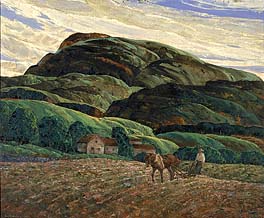
Farmers in the US and elsewhere have been moving increasingly towards the control of weeds with herbicides rather than with mechanical methods called "tillage."  This is actually an extremely good thing from an environmental point of view.  An image like that by Leo Breslau below looks romantic, but it actually represents an environmental disaster.

Plowed and tilled soils are susceptible to erosion.  Erosion carries not just sediments, but also fertilizers and pesticide residues into streams.  The mechanical disturbance of soil degrades its properties over time so that it becomes less able to capture and store rain and less able to sequester nutrients.  This sort of farming "worked" in many cases only because there was more "virgin land" to start plowing.  Beginning in 1960, some farmers began to experiment with "no-till" farming methods on a commercial scale.  One of the reasons they were able to do that was because herbicides like 2,4-D had become available.  Since the development of herbicide tolerant crops in 1996, the rate of conversion to no-till farming has been accelerating. From an environmental point of view, expansion of no-till farming  is highly desirable, especially if  combined with some other key practices. For farmers to successfully implement no-till farming; however, there must be a range of effective herbicide options.

Resistant Weeds

When any one herbicide is used too much, some weeds can become resistant.  As many experts predicted, this has begun to happen for glyphosate tolerance (Roundup Ready).  The selection for herbicide tolerant weeds is not something new with biotech crops.  It is a problem that has occurred many times, long before GMO crops.  They key is to employ multiple options including herbicides with different "modes of action," cultural methods like cover crops or planting date shifts, and in some cases the judicious use of tillage.   Recently, some weed scientists have highlighted the need for more sophisticated and varied weed control strategies.   The new corn and soybean types that are coming can be a part of that strategy if employed strategically.  The alternative of returning to mainly mechanical weed control is not an acceptable scenario.
Groups like the Center For Food Safety have generated furor by shouting an intentionally sensational half-truth.  Ironically, this has put them in the position of advocating against a tool farmers need for environmentally sustainable farming.  This new corn, and the soybeans that will follow, are part of what will enable land-use efficient, low environmental footprint farming. They have nothing to do with a 50 year old defoliant. There is absolutely no doubt that the lessons from "Agent Orange" must be remembered.  The innocent victims of Agent Orange deserve that heightened awareness.  What they don't deserve is to have their tragedy exploited in an irresponsible way.
The "Comment Period" at the USDA about this particular corn technology has been extended until April 27th.  The CFFS and its allies are mobilizing people to enter comments.  There is a need for counter-balancing arguments from those that understand the importance of technology in agriculture.  Here is where to comment (USDA BRS Comments) before the extended deadline of 4/27/12.

You are welcome to comment here and/or to email me at savage.sd@gmail.com
Vietnam spraying image from Wikipedia
Leo Breslau "Plowing" image from the Smithsonian
reade more... Résuméabuiyad